How Hollow Knight's Difficulty Rewards Tenacity
Restrictive Map Mechanics, Exploration, and Environmental Storytelling
Introduction
Metroidvania is a sub-genre of action-adventure games characterized by non-linear progression, exploration, and action in the form of boss fights[1]. Their focus on puzzle-based reasoning, high-stakes kinetic manipulation, and lack of positional awareness cultivate a level of difficulty that deters the majority of players, often compounding a feeling of apathy towards actually completing the game [2].
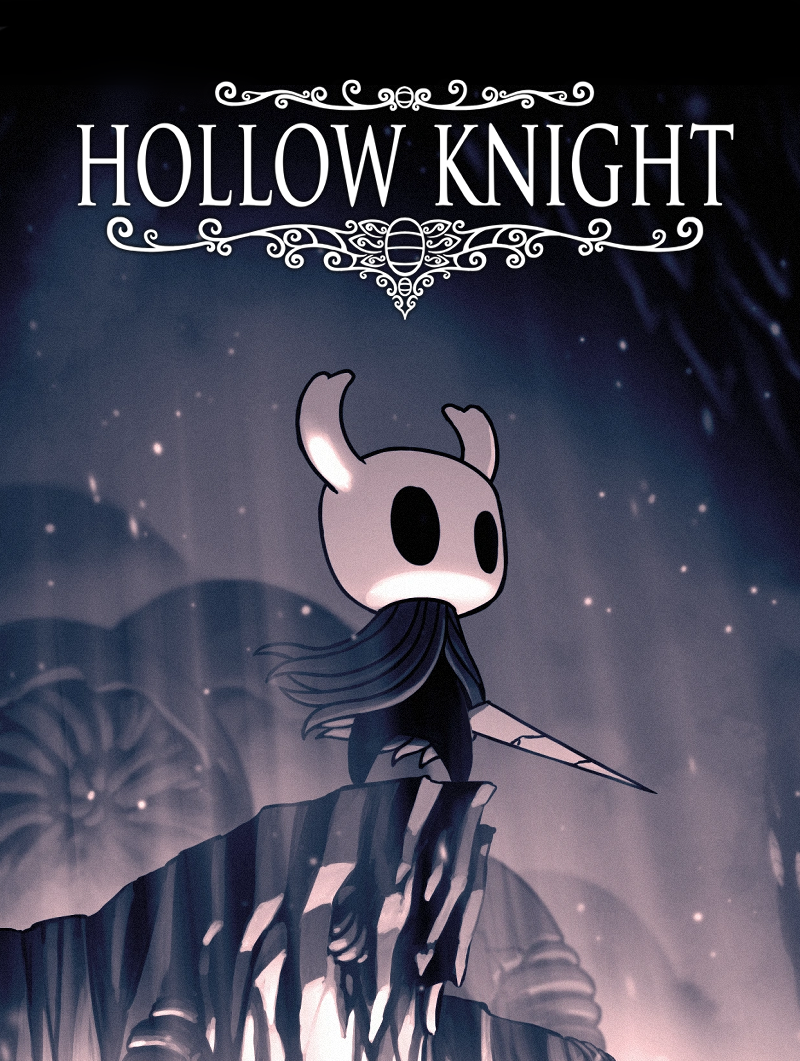
While Hollow Knight is a masterpiece of environmental storytelling, its difficulty and unique design choices act as a filter for players who lack the motivation and tenacity to withstand the game’s punishing consequences.
Overview
Hollow Knight is the first official release from the South Australian indie developers, Team Cherry. The concept evolved over two Game Jams, which are competitions where teams of developers spend a restricted amount of time developing a game. While the concept received poor initial ratings in the first Game Jam, the second one had a theme of Beneath the Surface, which was the defining moment in Hollow Knight’s conception.
Although they missed the deadline for the second Game Jam, the team continued, eventually leading to crowdsourcing as a means of funding development[3]. The success of the Kickstarter not only funded the team, but also provided a confidence boost that signaled to the team that they were “on to something cool,” as well as being a source of exposure for the game. Interviews held about the game also inspired many of the mechanics that became recognizable mechanics in Hollow Knight.
Hand Crafted World
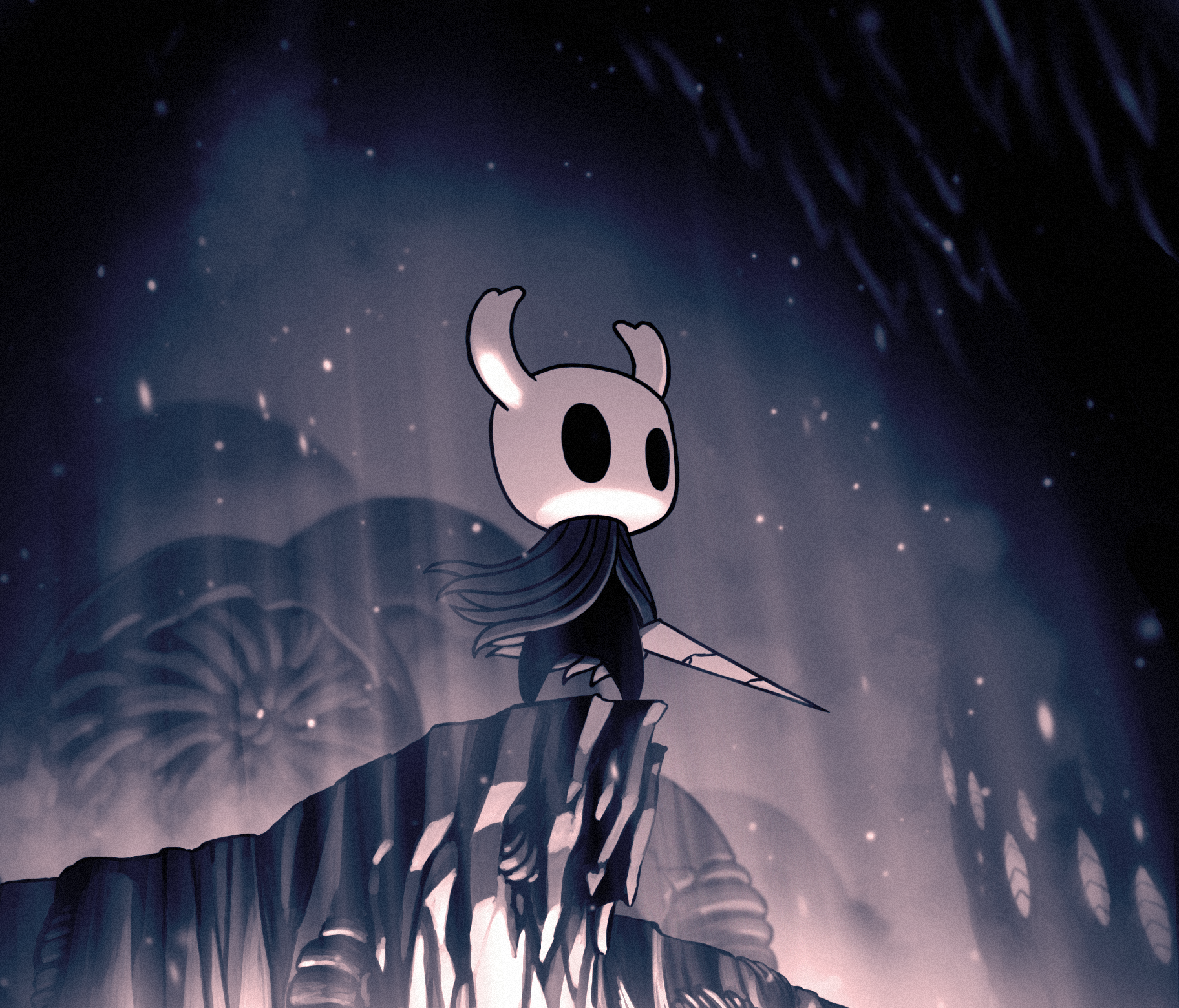
The unique and detailed hand-drawn environments do a lot of the heavy lifting in Hollow Knight’s storytelling. Each area of the map in Hallownest, the fictional setting where the game takes place, has a unique atmosphere, with color-schemes and enemies that help identify the different zones[4]. For example, the City of Tears has bluish tones and is perpetually raining, with Royal Guards as enemies, while The Abyss is dark and monochromatic, with fossil like enemies.
Each unique atmosphere is not only visually beautiful, but adds to the lore of Hallownest[5]. As players, we begin to conceive our own ideas as to what led to the downfall of the once great kingdom[6]. The chromatic variance of the different zones of Hallownest indicate emotional shifts as we move from the vibrant, lush greens of Greenpath to the oppressive, sterile blues and greys of the Forgotten Crossroads and the City of Tears.
The unique enemies encountered also indicate political divide and oppression. The Royal Knights attack you on sight, which reflects the moral indecency of the Pale King, and a lack of autonomy within the bugs themselves.
Attention to Detail and Environmental Storytelling
The high level of detail in both the foreground and the background of the game also indicate ruin and decay, such as the shattered windows and broken buildings in the Royal Waterways, and the overgrown vegetation and stained statues in Greenpath. These details implicitly hint that the Pale King’s control ultimately failed against the natural order of the world, solidifying that no kingdom truly lasts forever.
Since the game doesn’t have a quest log for guidance, the details scattered around the map lead the players progression while acting as motivation for the players to unravel the mystery of the kingdom. These details can include Lore Tablets, which document Hallownest’s history, Whispering Roots, which are graves of deceased bugs lingering with memories and regrets, statues and architecture of the Pale King, the Hollow Knight, and the three Dreamers, which foreshadow the final goal of the game from the beginning of the player’s experience[7].
Playing this game for the first time, I recognized that the Black Egg temple and the masks of the three Dreamers were pivotal components of the narrative, yet the ambiguity surrounding them added to the sense of mystery. This deliberate lack of immediate direction acts as an early filter as it demands tenacity from the player, offering neither explicit instructions on how to clear the obstacle nor any insight into how long it will take to uncover the truth.
Other than lore hints, there are also minute details that help guide the player’s progression through the game, from audio cues like the Grubs, which can be found trapped in glass jars throughout the map, and Cornifer’s humming, as well as scattered sheets of paper, which indicate that a new map can be purchased in an unexplored area. There are also subtle differences in the terrain that a player starts to pick up on as they familiarize themselves with the game, such as breakable walls and unlockable shortcuts. The sense of understanding that is developed as a player progresses through the game is a form of mental feedback that encourages continued exploration.
Beautiful Silence
Throughout the game, the player is able to interact with Non-Player-Characters (NPCs). The majority of characters have short bits of dialogue, but importantly, the player doesn’t feel weighed down by endless walls of text. This encourages the player to interact with NPCs when they can, gaining a deeper understanding of the fall of Hallownest, while keeping the mystery alive throughout the narrative.
Rather than laying out the details of the kingdom and its history, the characters appear as lost as we are, speaking in riddles and fragments of poetry, rather than providing direct instructions. This transforms the dialogue into yet another puzzle for the player to solve[7]. The one exception to this is Prince Zote, who is known for his inept combat skills, though this doesn’t prevent him from speaking endlessly about his “heroic feats,” to the point where even Bretta, another NPC, gets tired of listening to him. This comedic subversion highlights how precious the heavy silence is across the rest of Hallownest. Ultimately, the sparse dialogue feels more like an incentive rather than an obligation, and players that truly want to unravel this world’s mysteries will seek out these small fragments of lore rather than avoiding or skipping them.
Perfect Movement
Hollow Knight is a Metroidvania, which means it has an emphasis on exploration. In order to make the massive interconnected world bearable to traverse, satisfying movement is essential. Hollow Knight does a good job of easing the player into its movement mechanic. The tutorial zone is relatively easy to traverse and the map increases in complexity as the player progresses through the story.
The movement controller was designed in a unique way that gives the player an unusually high degree of control. The lack of acceleration and deceleration in the horizontal movement requires a level of mastery, but this further enhances the feeling of progression when a player learns to easily traverse areas of the map that they once struggled with. Jumping is also well implemented, as holding the jump button extends the vertical leap. Dashing also completely arrests vertical movement, meaning that any hit a player takes or a mistake they make could have been avoided right up to the last second[3]. This makes the character seem extremely responsive to input, ensuring the gameplay feels fair because as a player’s skills develop, they learn to avoid damage through pure reaction and precision.
Come Back Later
Another staple of Metroidvania games is non-linear progression. Compared to a game like Mario where there is a set start and end point for each level, a non-linear game like Hollow Knight doesn’t have a standardized route. Instead, the player is able to choose where to explore, the order of exploration, and when to re-explore an area. This introduces an element of choice, which is one of the five principles of playfulness in game design.
This interleaves with another element of the genre which is Kinetic Evolution. This is the acquisition of tools or abilities that allow the player to traverse areas that were previously inaccessible. In Hollow Knight, these abilities include spells for defeating enemies, the Mothwing Cloak, which unlocks the dash ability, the Mantis Claw, which allows the player to wall jump, the Crystal Heart, which lets the player launch vast horizontal distances, and Monarch Wings, which unlocks the double-jump ability. Unlocking these abilities grants the player access to new parts of the map which are usually placed barely out of reach.
This is a tactic employed by game designers to make certain parts of the map memorable to the player, encouraging them to return once they believe they have the necessary abilities to access the area[8]. This mechanic is known as Gear Gating, and serves to prevent players from accessing areas which exceed their difficulty level, as well as imbuing a sense of anticipation. The non-linear nature of the game means that players will consistently hit dead ends, forcing them to backtrack across the entire map, and early on in the game, this can cause a lot of frustration.
That combined with the lack of guidance means that passive players will most likely not have the motivation to continue playing the game. However, players that are tenacious enough to push through and gain the necessary abilities will feel a sense of enjoyment when returning to an area and overcoming an obstacle that was previously impossible. Furthermore, re-exploration of areas can lead to discovery of new lore or collectible items, which can motivate dedicated players to seek full completion of the game.
Map Mechanics
The map in Hollow Knight is vast and interconnected. Each zone is unique and requires the player to progress before they can access it. The first section of Hallownest that the player can access is called the Forgotten Crossroads. It is simple to traverse and has weak enemies, making it an ideal zone for the player to get familiarized with the movement mechanics. As the game progresses, the map evolves too. New rooms and pathways hidden behind breakable walls can be found. The difficulty also scales as the player progresses through the game.
An interesting design choice that the team behind Hollow Knight made was the map evolution. At a certain progress point in the game, the Forgotten Crossroads becomes the Infected Crossroads. From a storytelling perspective, this fits into the narrative that Hallownest is being overtaken by an infection. This can be seen in other areas of the game, for example, Myla, a happily humming miner becomes overtaken with the infection and goes from a friendly NPC to an enemy that tries to kill the player. This is an emotional moment as it indicates that all the enemies that attack the player may have also been sentient and friendly at some point, but due to the infection, they have become mindless, feral creatures.
The mechanical benefit to this map evolution is that, compared to other areas of the map, the Forgotten Crossroads becomes too easy to navigate and traverse. The decision to evolve this zone into the Infected Crossroads and block off easily accessible areas, as well as introduce buffed enemies, increases the level of difficulty, balancing out with the rest of the game[5].
The map itself is a big mechanic and is implemented in a unique way in Hollow Knight. In the game, the player must purchase maps from Cornifer, a friendly NPC that loves exploration and cartography. As well as purchasing a new map for each area, the player must also purchase a quill. This is because Cornifer only sketches out a small subsection of the area. The rest of the area which is too dangerous for him must be filled in by the player. This allows players to track their progression by visualizing unexplored pathways, effectively encouraging total spatial exploitation. This mechanic is known as Fog-of-War[9].
This also works in tandem with Gear Gating, since it is obvious on the map which parts the player was unable to explore, the player can return once new abilities have been unlocked and check if it allows them to access a new area. The lack of guidance in the game makes the player feel directionless.
Until the map is acquired, the player is plunged into a state of vulnerability, stripped of traditional navigational safety nets. For the casual player, Fog-of-War is a source of anxiety and apathy. On the other hand, hearing Conifer’s nonchalant humming amidst a hostile environment becomes a moment of psychological relief for those tenacious enough to bear through the debilitating directionlessness.
Meaningful Objectives
Part of what makes Hollow Knight so satisfying to those tenacious enough to see it through is the meaningfulness of the hidden objectives and collectibles throughout the game. While games like Marvel’s Spiderman fill the map with superficial collectibles which serve to artificially extend playtime and pacify completionists, Hollow Knight ensures that the player feels rewarded for going out of their way to amass collectibles by enriching the player’s loadout with Vessel Fragments, which increase the player’s maximum Soul, Mask Shards, which represent the player’s health, or Geo and valuable resources such as Pale Ore, which allow the player to purchase Charms and upgrade their Nail, the primary weapon.
However, the developers intentionally hide these vital resources behind unforgiving gatekeepers, such as illusionary walls and optional, unique bosses. The lack of guidance or a structured checklist means that the casual gamer may not tackle these obstacles. Combined with the lack of mechanical mastery of movement and offense, a deficient loadout amplifies the difficulty of major milestones in the game [10]. On the other hand, the unguided high-stakes encounters become deeply personal victories, filtering out passive consumers while offering hardcore gamers a profound sense of self-directed mastery.
Conclusion
In conclusion, Hollow Knight is a masterclass in environmental storytelling. The detailed environments provide an implicit understanding of why Hallownest is the way that it is, and the sparse dialogue helps keep the mystery alive while highlighting the beauty of silence throughout the narrative. As a Metroidvania, non-linear progression forces the player to engage with Hallownest on their own terms.
The tasteful design of the map and elegant implementation of Gear Gating ensures the world always feels as though there is more to explore, while the directionlessness helps amplify player satisfaction when acquiring collectibles. Overall, the genius of Hollow Knight lies in its refusal to compromise its vision for passive consumers, ensuring that tenacious players feel a sense of triumph when overcoming unguided obstacles and uncovering the mysteries of the fallen kingdom.
References
1 Jeremy Parish. Why Koji Igarashi Is Grateful for the Word 'Metroidvania' https://web.archive.org/web/20150402102124/http://www.usgamer.net/articles/gdc-2014-why-koji-igarashi-is-grateful-for-the-word-metroidvania
2 Flora Merigold. Why I Don't Like Metroidvanias https://epiloguegaming.com/why-i-dont-like-metroidvanias/
3 Game Informer Editorial. The Making Of Hollow Knight https://gameinformer.com/2018/10/15/the-making-of-hollow-knight
4 Thomas Jenkins. Hollow Knight Deserves More Love https://medium.com/the-coastline-is-quiet/hollow-knight-deserves-more-love-664a98dff4b6
5 Dimas T. de Lorena Filho. Hollow Knight - A Lesson in Game Design https://dimasgibi.medium.com/hollow-knight-a-lesson-in-game-design-8cc4ff8aa1cd
6 Zachery Wolf. The Surreal Philosophy of Hollow Knight https://www.gamedeveloper.com/design/the-surreal-philosophy-of-hollow-knight
7 Charlie Case. Hollow Knight, Memory, and Minimalist Storytelling https://longriverreview.com/blog/2024/hollow-knight-memory-and-minimalist-storytelling/
8 Wes Fenlon. How to Design a Great Metroidvania Map https://www.pcgamer.com/how-to-design-a-great-metroidvania-map/
9 Abhishek Iyer. Getting Lost (by Design) in Hollow Knight https://medium.com/super-jump/getting-lost-by-design-in-hollow-knight-a2919bcab74e
10 Flora Merigold. Why I Quit Playing Hollow Knight https://epiloguegaming.com/why-i-quit-playing-hollow-knight/