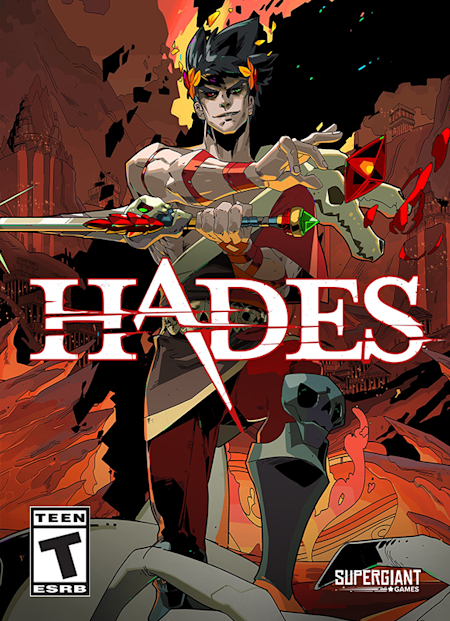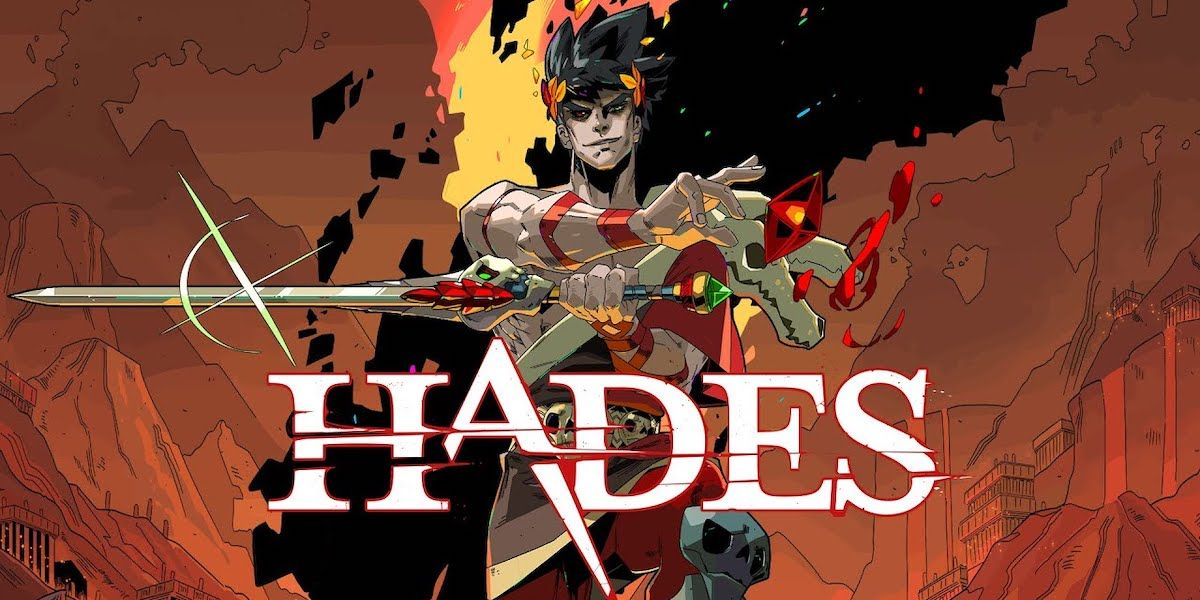
Game Log - How 'Hades' Solved the Roguelike Genre
Immortality, Narrative Progression, and Evolution of the Game Loop
Introduction
The Roguelike genre has a polarized audience, with some hating the repetitive nature and punishing loss state, and some loving the high stakes gameplay and rigorous grind[1]. The problem with many Roguelike games is that, when the player dies, they feel a complete loss of progress.
Hades embeds death into the narrative by utilizing immortality as justification for respawns, enabling the player to upgrade their loadout and allowing the narrative to be unfurled across multiple game loops, enhancing the feeling of progression through an evolving relationship with Greek mythological figures[2].
Overview
Hades was the fourth game developed in Supergiant Games’ lineup, officially released in 2020, but was available via Early Access on Steam and Epic Games as early as 2018[2]. The Early Access development strategy made a great impact in the evolution of the game, as the developers were able to see immediate impact of changes made to the story, while slow-dripping lore to the players. The immediate feedback loop allowed the developers to monitor the reception of narrative changes in real-time, culminating in a polished final product by the time the game was officially released.
This also had the benefit of creating a lot of community engagement, strengthening the bond between the small development team and the supporters of their products. Hades was also a step outside of the studio’s comfort zone, since they usually developed completely original worlds, while Hades was a creative adaptation of existing Greek mythology.
The Death Mechanic
Hades has one of the most unique and immersive respawn mechanics of any modern video game. While most games reset the world upon a player’s death, Hades capitalizes on immortality in Greek mythology to create a persistent and immersive world for the players to navigate through.
After each death, Zagreus, the main character, emerges from a pool of blood, rebirthed after an attempt to escape from the underworld. This affects the player psychologically. Where in most other games, players feel as though when they die, they completely lose all progress, in Hades, while the player may still start over from Tartarus during their next run, they still unlock features and storylines that makes the death feel like part of the game loop, rather than a loss-state.
This is also more immersive from the player’s point of view, since respawning actually makes sense in the context of this game’s world. Additionally, since Zagreus’ death is canon in the story, this creates a ludonarrative harmony between the character’s frustration of dying repeatedly and the player’s frustration[3].
Another benefit to dying in the game is the ability to unlock certain permanent upgrades. This mechanic is known as Meta-Progression[4]. The following is a lsit of the available currencies and what they can be spent on:
- Charon’s Obols: Gold coins used to buy boons, health, and power-ups from Charon’s shop or Well of Charon.
- Darkness: Used at the Mirror of Night to upgrade Zagreus’s permanent stats.
- Chthonic Keys: Used to unlock new Mirror of Night talents and the Infernal Arms.
- Gemstones: Used at the House Contractor for aesthetic renovations and functional room upgrades.
- Nectar: Gifted to NPCs to build relationships and receive Keepsakes.
- Titan Blood: Used to unlock and upgrade weapon Aspects. Earned by defeating the first and last bosses.
- Diamonds: Used for high-tier House Contractor projects. Earned by defeating the second boss.
- Ambrosia: Used to deepen relationships to the maximum level and upgrade Cthonic Companions. Earned by defeating the third boss.
The variety of upgradable items provides the player with different choices to make while traversing the underworld. For example, if the player wants to upgrade their stats with The Mirror of Night, they can prioritize collecting darkness during a run, while an intention to upgrade the map with the House Contractor may lead to the decision to prioritize gems during another run.
The variety of goals and choices that can be made during gameplay makes the rigorous grind of the endgoal, escaping the underworld, seem less repetitive and more replayable, while the Meta-Progression engages the player by ensuring they feel some form of development.
Slow Dripped Lore
What makes the unfurling narrative of Hades so effective is the structural complexity. The statetracking system used to ensure that the storylines are congruent with the player’s experience is extremely detailed. This allows the player experience to be augmented to a level unique to this genre of video games.
For example, while many games offer obtrusive tutorials and popups throughout the gameplay[5], Hades approaches the challenge of teaching the player about the game in a unique way. One of the characters, Skelly, light-heartedly informs the player about certain features of the game while maintaining immersion in the game setting.
Furthermore, several interactions with characters in the game respond to the player’s failures and achievements. This requires careful tracking of several game-states, such as how the player died, who they defeated, who they interacted with during their run, and how far they were able to get, as well as an immense script of over 300,000 words[6]. This procedural storytelling makes the story feel unique to the individual player’s journey.
The Challenge of Challenges
Roguelikes aren’t only disliked due to their repetitive nature. They are also notoriously difficult for the average gamer. This further polarizes an already highly opinionated audience.
Supergiant Games made the design decision to include a God Mode option that makes the character more resilient towards enemy damage, as well as turning death into a 2% strength buff[2]. This caters to both audiences that want a challenge, as well as the audience that prefers to enjoy the story of the game.
Furthermore, the Pact of Punishment is a feature unlocked after successfully escaping the underworld for the first time. This feature increases the difficulty in exchange for attaining rare in-game items such as Titan Blood and Diamonds, further increasing replayability beyond the completion of the main campaign while still giving players a goal.
Evolving Relationships
The state-tracking system isn’t limited to the broader story of the game. There is also a per-run state tracking system that manages which Greek gods the player interacted with, and which temporary upgrades (Boons) were selected, altering certain voice-lines. This system operates like a complex web of conditional logic, tracking not only the current inventory, but the order of operations as well.
For example, if the player accepted a Boon from Athena in a previous round, Zeus may make a comment such as “I see Athena got to you before I did”, creating the illusion of a living, gossiping pantheon that is aware of the player’s every move. This, combined with the procedural world generation and random variation of bosses, creates variation between runs, increasing the game’s replayability, adds excitement between runs, and makes the game feel more personalized to the player’s tactical choices.
Another aspect of the narrative that makes this game stand out in the Roguelike category is the evolving relationships with Non-Player-Characters (NPCs). Each interaction with an NPC unlocks lore within the world of Hades. There are several relationships that develop within the game, including those in The House of Hades, enemies that are encountered, and the Gods of Olympus.
Each interaction is unique and builds upon the story. The diversity of player-character interactions distinguishes Hades from other games, both within and outside the Roguelike category.
In most video games, after interacting with an NPC once, the next time you interact with them, the repetition of dialogue usually results in the player skipping past the dialogue to continue gameplay. In Hades, this is not the case. Each interaction is unique and further builds upon the lore of the game.
Incentives to Socialize
There are also further incentives to seek out interactions with NPCs in the game. For example, one incentive is the Codex of the Underworld. The codex helps track your progression in the game, tracking your encounters with mobs, the Boons unlocked with the Greek gods, and the state of your relationships with the NPCs.
There are also equippable items that are unlocked by exchanging Nectar with characters in the game. These mechanics in tandem encourage the player to explore and interact with NPCs, both during runs and after respawning at the House of Hades. This also introduces a breather in the game loop.
While most games don’t give you much to do other than upgrade your gear in between runs, in Hades, players can spend a few minutes interacting with NPCs and learning more about the game’s world. This feature of the game also provides psychological relief, since this is where the real story unfolds. This makes death in the game feel like a reward rather than a punishment.
Conclusion
In conclusion, Hades redefined the Roguelike genre by successfully bridging the gap between punishing gameplay and high-quality storytelling. It tackled many of the pain-points of traditional Roguelikes by incorporating many unique ideas such as narrative justification for respawns, robust meta-progression, and evolving relationships that react to the player’s unique journey.
By treating death as a system for the advancement of narrative, Supergiant Games solved the repetitive grind that alienates broader audiences. The game’s sophisticated state-tracking and massive script ensure that the player’s journey feels personal and purposeful, proving that procedural systems can coexist with deep, emotional character arcs. Ultimately, Hades serves as the perfect example of ludonarrative harmony, demonstrating that the formal aspects of game design can work in tandem to transform a cycle of failure into a compelling story of tenacity and persistence.
References
1 Astrid Johnson. Hot Takes Friday - Roguelike Games Are Boring https://www.gamerevolution.com/originals/410607-hot-takes-friday-roguelike-games-boring
2 Supergiant Games. Hades FAQ https://www.supergiantgames.com/blog/hades-faq
3 Natalia Nazeem Ahmed. Dying Is Good for You - How Hades Uses Repetition to Push Its Narrative Forward https://natalia-nazeem.medium.com/dying-is-good-foryou-how-hades-uses-repetition-to-push-its-narrative-forward-b5ceaadcf8ae
4 Zeno Rogue. Are Roguelikes Bad? https://zenorogue.medium.com/areroguelikes-bad-de3a9856a3e5
5 Jeremiah. Things I Hate About Roguelikes https://www.goldenkronehotel.com/wp/2017/06/01/things-i-hate-about-roguelikespart-1-burden-of-knowledge/
6 Jimmy Donnellan. Supergiant's Hades Contains More Words Than The Iliad and Odyssey Combined https://culturedvultures.com/supergiant-hades-wordcount-dialogue/